Paid media is noisier, tracking is noisier, and budgets leak. This guide shows a practical, operator-level approach to triage and fix accounts quickly — with step-by-step actions and two ExecWrite tools you can run today. Learn more at ExecWrite.
- Most wasted spend comes from structure, negative keywords, and ad-to-landing mismatch — not just bidding.
- Run a fast wastage snapshot and a targeted bid-adjustment audit to recover spend and stabilize CPA.
- Use the 90-minute triage playbook to prioritize fixes, then iterate weekly.
Why PPC feels harder now
Scaling paid media is harder because three forces stack: auction competition and CPC pressure, fragmented measurement and attribution, and increased account complexity (automated bidding + layered audiences). That means simple budget increases no longer equate to scale — you need surgical fixes: cut leakage, tighten intent, and time bids precisely.
The 5 biggest PPC problems marketers face
1. Wasted spend and budget leakage
- High spend on low- or zero-converting queries.
- Branded and irrelevant traffic consuming budget.
- Rising CPA with flat conversions despite increased spend.
Accounts accumulate non-converting queries, duplicated keywords, and weak negatives. Automated bidding amplifies waste if the signal set is noisy.
- Export top search terms by spend and tag low-intent queries.
- Apply negatives for common waste patterns (e.g., research vs. purchase modifiers).
- Pause or reduce bids on low-conversion campaigns; reallocate to clean, high-intent segments.
2. Poor keyword/account structure and ad-group drift
- Broad ad groups with mixed intent keywords.
- Low CTR and weak ad relevance scores.
- Hard-to-interpret performance by ad group.
Quick launches and reactive edits create ‘keyword soup.’ That reduces relevance and bidding precision, and makes automated strategies unstable.
- Split ad groups into single-theme groups (3–10 keywords each).
- Create matching ads and landing page paths per group.
- Use negative keyword lists to prevent cross-contamination.
3. Bid timing and dayparting that don’t match demand
- Hour-of-day CPA swings 2x–4x.
- Unnecessary spend in off-hours with poor conversion rates.
- Bidding rules that ignore hourly performance.
Default ad schedules and automated bidding ignore intra-day behavior. Without dayparting, you overpay during slow windows and under-invest when intent peaks.
- Analyze hour-by-hour CPA/ROAS for core campaigns.
- Apply -20% to -50% adjustments on low-performing hours; shift budget to top windows.
- Test ad schedules for 7–14 days and iterate.
4. Low Quality Score / landing page mismatch
- Low expected CTR, low landing page experience scores.
- High CPC but low conversion rate.
If ad messaging, keywords, and landing pages are misaligned, Google lowers relevance. That increases CPC and reduces ad rank — you pay more for less traffic.
- Audit top-ad/landing page pairs and align headlines with primary keywords.
- Fix major UX issues: load time, CTA clarity, form friction.
- Run an A/B headline test on the highest-traffic ad groups.
5. Creative stagnation and poor testing cadence
- Same ads running for months with declining CTR.
- No formal test plan or sample size calculations.
Teams prioritize launches over optimization. Without a testing cadence, you miss incremental lifts that compound at scale.
- Rotate 3 new headlines and 2 descriptions per ad group; measure CTR lift after 7–14 days.
- Document winners and roll into similar groups.
- Use high-intent keyword language in top-performing headlines.
Fixes you can apply this week
- Run a search-term spend export and add negatives for irrelevant top spenders.
- Split 10 worst-performing ad groups into tighter themes and create matching ads.
- Apply hour-of-day bid adjustments based on last 90 days of data.
- Prioritize landing-page fixes for top 20% traffic pages (headlines, load speed, CTA).
- Launch 3 creative variants per priority ad group and measure CTR/CR over 14 days.
Run a rapid account snapshot at ExecWrite and get an itemized recovery plan that highlights wasted spend and negative keyword opportunities.
Tool-based workflow: map pain to ExecWrite tools
Tool: Wastage Snapshot & Recovery (what it outputs)
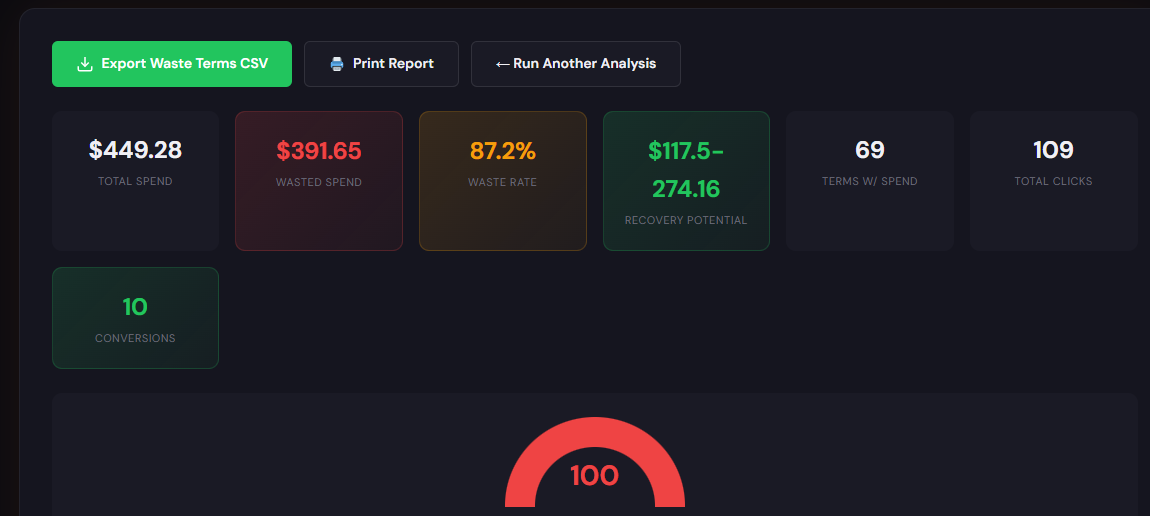
The Wastage Snapshot produces a dashboard-style audit: total wasted spend, top leakage areas by query/campaign, negative keyword suggestions, and a recovery plan with prioritized actions.
How to use it (3 steps):
- Upload your Google Ads export or connect your account to the snapshot tool.
- Review the top-10 leakage items and apply the suggested negatives and campaign pauses.
- Download the recovery plan and schedule the top 3 fixes for the next 7 days.
Open the Wastage Snapshot & Recovery tool
Tool: Bid Adjustment by Search Term — Search Term Analyzer (what it outputs)
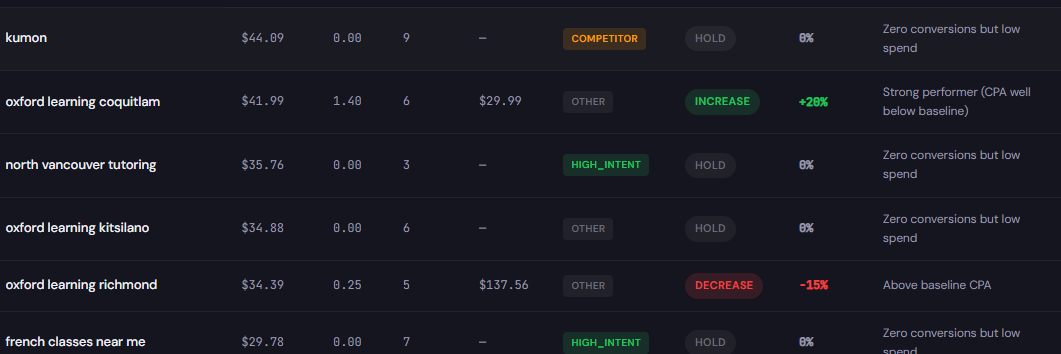
The Search Term Analyzer outputs a per-query table: spend, conversions, conversion rate, recommended bid action (increase / decrease / negative), and tags for quick filtering.
How to use it (3 steps):
- Export search term report and load into the analyzer.
- Quick-tag queries by intent (purchase, research, competitor) and accept recommended bid adjustments for purchase intent queries.
- Push adjustments back to Ads Editor or implement via scripts; retest after 7 days.
90-minute account triage playbook
- 0–10 min: Top-line check — account spend, CPA trend, conversion count, major anomalies.
- 10–30 min: Run Wastage Snapshot and export search-term spend (identify top 20 leakage items).
- 30–50 min: Apply high-confidence negatives and pause non-brand low-converting queries.
- 50–70 min: Run Search Term Analyzer to generate bid adjustments and tag intents; apply hour-of-day recommendations for top campaigns.
- 70–90 min: Prioritize landing-page fixes and schedule creative tests; document changes and expected impact.
Use the two tools above to cut waste and retune bids quickly. If you want a guided run-through, start at ExecWrite to generate a recovery plan in minutes.
FAQ
No — you can upload exports for a snapshot and search-term analysis. Direct account connections speed the process but are optional.
Fixes like negatives and hour-of-day adjustments often yield measurable CPA improvement within 7–14 days. Structural changes and landing page updates compound over several weeks.
Automated bidding adapts to new signals. Make changes in controlled tests and monitor. Use bid adjustments and cleaner signal sets to help automated strategies converge faster.
Use at least 60–90 days when available to smooth weekly seasonality; if your account has low volume, use 6–12 weeks to ensure statistical relevance.
Sources
- Google Ads: About Quality Score — core concepts on ad relevance and landing page experience.
- Search Engine Land: Why CPCs have risen — context on auction pressure and competition trends.
- WordStream: Common wasted ad spend causes — practical examples of leakage and negatives.
Leave a Reply