PPC looks harder because measurement, automation, and user intent have changed. This post gives a punchy triage, checklist fixes you can apply this week, and a tool-based workflow using ExecWrite so you stop bleeding ad spend. Try the tools at ExecWrite for rapid diagnostics.
- Wasted spend, automation drift, and search-term leakage are the top causes of sudden performance drops.
- Apply a 90-minute triage and this week’s checklist to recover conversions fast.
- Use ExecWrite’s Wastage Snapshot and Search Term Analyzer to map leaks to fixes and execute recommendations.
Table of Contents
Why PPC feels harder now
Three structural shifts make optimization less intuitive: automation masks root causes, privacy/attribution noise reduces signal reliability, and scale plus dynamic creatives expose mismatches between ads and landing pages. Google’s automated bidding and smart campaigns can improve outcomes but also amplify errors when inputs or intent change — which is why a fast, signal-focused triage is essential. For how smart bidding interprets signals, see Google’s guidance on automated bidding and signals.
The 5 biggest PPC problems marketers face
Symptoms
- High spend with declining conversions
- Many low-intent clicks (broad queries) with low conversion rate
- High CPA for campaigns that previously performed
Why it happens
Broad match and aggressive automation can broaden reach into low-intent queries. Without quick negative-term controls or snapshot audits, budgets flow to low-value traffic.
Fix this week
- Run an immediate search-term leak audit and add negatives for low-intent buckets.
- Pause or cap spend on campaigns with CPA spikes; reallocate to top cohorts.
- Limit broad match exposure with tighter match types or modified broad queries.
Symptoms
- ROAS/CPL swings after algorithm changes or budget shifts
- Ad groups with similar history diverge widely
- Manual bid overrides aren’t sticking
Why it happens
Automated bidding needs stable conversion signals and consistent budgets. Sudden budget changes or noisy conversions confuse models and trigger suboptimal bid adjustments.
Fix this week
- Temporarily switch to conservative bid targets or Enhanced CPC until signals stabilize.
- Ensure conversion windows and value settings are correct and consistent across campaigns.
- Run a short-term A/B: pause automation on a test campaign to compare performance.
Symptoms
- Irrelevant search terms generating spend
- High-volume generic terms consuming budget
- Unexpected brand/competitor queries
Why it happens
Poorly segmented ad groups and loose keyword structures let ads trigger for unqualified queries. Without routine search-term reviews, negative keywords pile up too slowly.
Fix this week
- Export top spend search-terms last 30 days and tag by intent.
- Add negatives in bulk for non-converting categories.
- Create new tight-match ad groups for high-intent queries to isolate performance.
Symptoms
- CPA changes dramatically by hour/day
- Conversions cluster at specific times while spend remains constant
- Ad schedule not aligned with peak performance
Why it happens
Aggregate schedules hide hourly variance. Automation may bid into hours that look expensive when examined at the wrong granularity.
Fix this week
- Review hourly performance and apply manual bid adjustments for peak/off-peak hours.
- Use ad scheduling to concentrate budget on conversion hours.
- Test small incremental bid changes by hour instead of full-scale schedule changes.
Symptoms
- High impression share but low CTR and rising CPC
- Drop in conversion rate without click volume changes
- Ad copy mismatch with landing page messaging
Why it happens
Ad relevance and landing page experience directly affect Quality Score and CPC. If creatives or offers diverge from landing pages, both traffic quality and conversions suffer.
Fix this week
- Align headlines and CTAs between top ads and landing pages.
- Run a fast content audit for top 10 landing pages and fix messaging gaps.
- Prioritize pages with high traffic but low conversion for quick copy/CTA tests.
Fixes you can apply this week
- Export last 30 days of search terms and tag high-spend, low-convert groups.
- Apply negative keywords in bulk for low-intent clusters (exact + phrase negatives).
- Run a 24–72 hour budget cap on underperforming campaigns while reallocating to proven winners.
- Check conversion tracking windows and ensure consistent values and attributions.
- Apply hourly bid adjustments for top 3 converting hours; monitor CPA changes daily.
- Prioritize landing-page headline alignment for the top 5 high-spend ad groups.
Use a snapshot audit to find wasted spend pockets and immediate negative keyword opportunities.
Tool-based workflow: map pain points to ExecWrite tools
Below are the two ExecWrite tools you should use first. Each produces exportable, action-ready outputs so you can implement fixes inside Google Ads or Google Ads Editor.
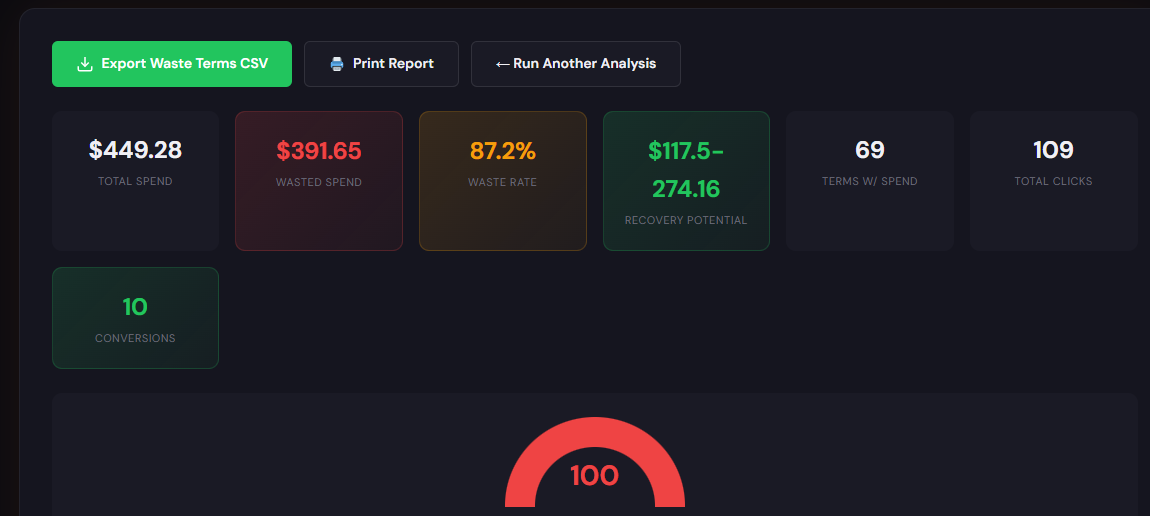
Dashboard-style snapshot showing waste totals, top leakage areas, negative keyword candidates, and a recovery plan summary.
- Upload your account data or connect via CSV; run the snapshot to highlight wasted spend buckets.
- Review the recovery plan: negative keyword groups, misallocated budgets, and campaigns to pause.
- Export negative keywords and budget action list; implement immediately in Google Ads or Editor.
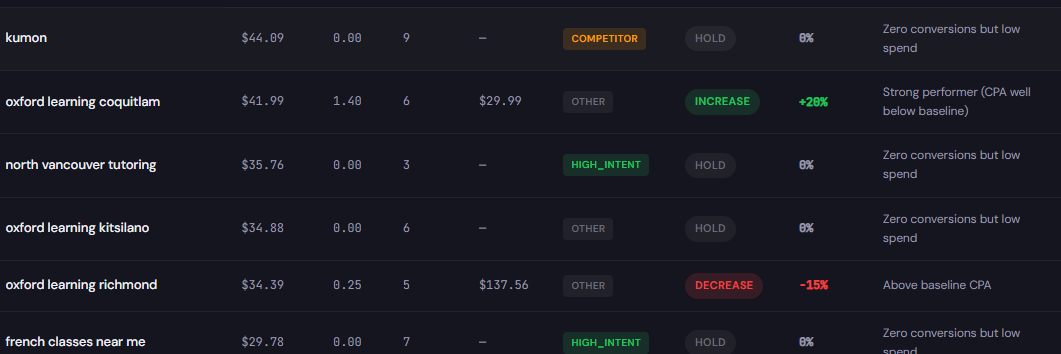
Search-term table that shows spend, conversions, CPA/ROAS, tagable intent buckets, and recommended bid actions by term.
- Upload your search-term report (last 30–90 days). The tool categorizes intent and flags low-value terms.
- Apply the recommended negative-keyword and bid-adjustment exports to Google Ads Editor or via bulk upload.
- Monitor grouped terms and apply hourly bid adjustments where the tool signals dayparting effects.
90-minute account triage playbook
- Minutes 0–10: Pull core reports — search terms, campaign spend, conversions, hourly performance.
- Minutes 10–25: Run Wastage Snapshot to identify top 3 leakage areas (negative keywords, misallocated budgets, broken campaigns).
- Minutes 25–40: Use Search Term Analyzer to tag and export low-intent queries; prepare negative lists.
- Minutes 40–55: Implement immediate fixes — add negatives, cap budgets, pause worst performers, and push high-performing budgets up.
- Minutes 55–75: Apply quick landing-page headline fixes for top ad groups and update ad copy if messaging mismatch is found.
- Minutes 75–90: Document actions, set 48-hour monitoring checks, and schedule a follow-up A/B test for critical changes.
Execute the 90-minute playbook faster with automated exports and recovery recommendations from ExecWrite.
FAQ
You should see reduced wasted clicks within 24–72 hours, but conversion-rate improvements can take a week as automated bids readjust.
Yes. ExecWrite exports are CSV-ready for Google Ads Editor so you can bulk-apply negatives, bids, and campaign changes safely.
You can run exports from reports and upload a CSV; direct account connections require proper permissions and are optional.
If automation is active, set conservative targets or pause bidding briefly while changes settle. The triage includes steps to stabilize automated bidding.
Leave a Reply